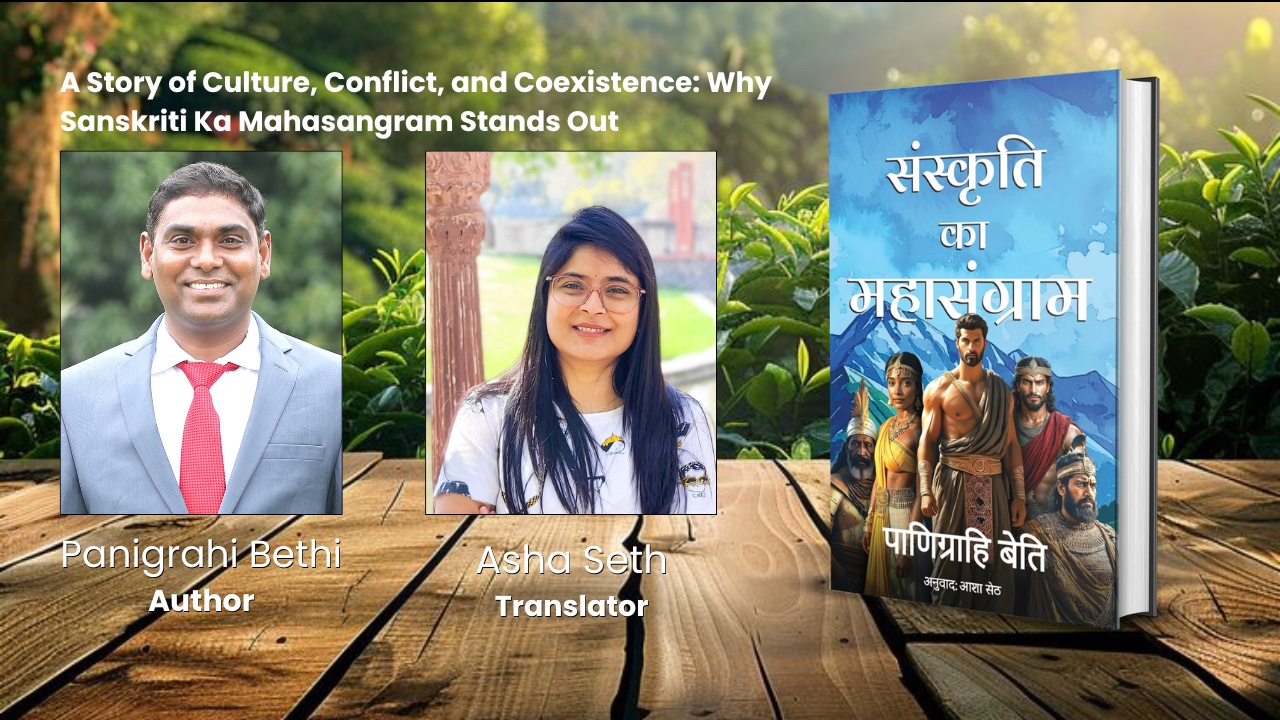
Sanskriti Ka Mahasangram is more than just a historical novel—it is a deeply immersive exploration of culture, identity, and transformation that brings ancient India vividly to life. Written by Panigrahi Bethi and sensitively translated into Hindi by Asha Seth, the book reimagines the encounter between the Harappan civilization and the Aryan tradition, not merely as a clash of worlds, but as a powerful journey of coexistence and change. Through rich storytelling, layered characters, and thoughtful perspective, the novel bridges the gap between history and human experience, making the past feel both immediate and profoundly relevant to today’s world.
When we think of history, we often remember dates, wars, and major events, but the human stories, emotions, and cultural realities behind them are frequently forgotten. Sanskriti Ka Mahasangram, written by Panigrahi Bethi and translated into Hindi by Asha Seth from the English original The Greatest Battle of Culture, beautifully fills this gap.
This remarkable novel brings alive an ancient chapter of Indian history, where the Harappan civilization and the Aryan tradition encounter one another in ways that shape not only their own destinies, but the very roots of Indian civilization. Successfully launched on 25th March, 2026, the book is now available worldwide in both paperback and e-book formats. It has already begun receiving warm appreciation and praise from readers and literary circles alike.
Purchase your Copies: https://www.amazon.in/dp/9349988852
Reviving the Harappan Civilization with Depth and Brilliance
One of the most compelling features of this novel is its vivid portrayal of Harappan life. Panigrahi Bethi paints the Harappan world with extraordinary richness, and Asha Seth brings that same emotional and cultural depth alive for Hindi readers with grace and sensitivity.
Speaking about the book, Panigrahi said, “This story is not just about two civilizations clashing, but about how they reshape each other in the process. In many ways, it reflects the roots of who we are today.”
In the novel, the Harappan world feels astonishingly alive. Its intricate systems function with precision above and below the ground, potters work skillfully with clay, and its architecture reflects an advanced and highly organized society. The storytelling is so immersive that readers do not merely observe this civilization from a distance; they feel as though they are walking through it.
What makes this especially powerful is that the novel does not treat the Harappan civilization as primitive or distant. Instead, it presents it as sophisticated, structured, and visionary, reminding readers that many of its ideals still mirror the aspirations of our modern world.
The Aryan World: Movement, Power, and Transformation
Contrasting this structured Harappan world is the dynamic force of the Aryan tradition. Here, life unfolds with movement, energy, conquest, and Vedic thought. Horseback journeys, evolving customs, and a strong warrior ethos shape this culture.
When these two worlds come face to face, the result is not simply conflict, but transformation.
What elevates the narrative is its refusal to oversimplify. The novel does not divide its world into easy heroes and villains. The Harappans are not idealized into perfection, nor are the Aryans reduced to mere antagonists. Instead, both civilizations are portrayed with nuance, dignity, and contradiction. Each carries strengths, flaws, and a deeply human complexity.
Complex Characters That Leave a Lasting Impact
At the heart of Sanskriti Ka Mahasangram are characters who are layered, memorable, and emotionally resonant.
Purusha, who represents the Aryan world, experiences a quiet but profound transformation when he encounters Harappan life. His journey suggests that true understanding cannot be forced; it can only emerge through openness and experience.
Baguhara, the Harappan ruler, stands as a symbol of wisdom, responsibility, and cultural guardianship during a time of great uncertainty.
Armita brings courage, intelligence, and emotional depth to the narrative. Her connection with Purusha becomes more than a personal relationship; it emerges as a symbol of the fragile yet powerful possibility of harmony between different cultures.
The philosophical tension between Ashwin and Varun adds another layer of depth, turning the novel into more than a historical narrative. It becomes a story of ideas, values, and competing visions of the future.
Why This Novel Feels So Relevant Today
In a time when the world is actively debating cultural identity, diversity, belonging, and coexistence, Sanskriti Ka Mahasangram feels deeply relevant. It reminds us that cultures do not remain untouched by one another. When they meet, there may be friction, but there is also exchange, adaptation, and the creation of something new.
Asha Seth beautifully reflected this while speaking about the translation: “Translating this book was about more than just language. It was about carrying its emotional and cultural depth across worlds. I wanted Hindi readers to experience it as intimately as the original.”
This idea of cultural blending is central to the story and to the making of Indian civilization itself. That is why this novel does not simply revisit the past; it speaks directly to the present. In today’s global and interconnected world, its message feels not only relevant, but essential.
A Celebrated Launch and Worldwide Reach
The launch of Sanskriti Ka Mahasangram marked the beginning of what promises to be a meaningful literary journey. The response so far has been highly encouraging, with readers appreciating its powerful storytelling, historical imagination, and thought-provoking themes.
Now available worldwide through major bookstores and online platforms, both the English and Hindi editions are accessible to readers across the globe. Whether one is a lover of history, a reader of literary fiction, or simply someone seeking a meaningful and immersive narrative, this book offers something truly special.
Get your copy today and step into a remarkable journey through ancient India, culture, conflict, and transformation.